The global cosmetics industry is becoming increasingly regulated, and consumers are more conscious than ever about product safety, quality, and sustainability. As a result, cosmetic brands and manufacturers must carefully evaluate the raw materials they use in their formulations.
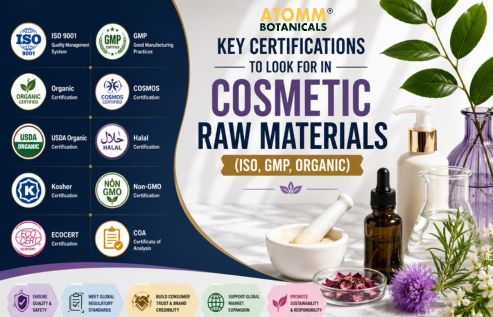
One of the most reliable ways to assess ingredient quality is by verifying the certifications held by raw material suppliers. Certifications demonstrate a supplier’s commitment to quality management, manufacturing standards, regulatory compliance, and environmental responsibility.
In this Blog, we’ll explore the key certifications you should look for when sourcing cosmetic raw materials.
Why Certifications Matter in Cosmetic Raw Materials
Certified raw materials help brands:
- Ensure product quality and consistency
- Meet regulatory requirements
- Improve consumer trust
- Reduce supply chain risks
- Support global market expansion
- Strengthen brand credibility
Whether you’re formulating skincare, haircare, personal care, or wellness products, choosing certified ingredients is an essential step toward building a successful cosmetic brand.
1. ISO 9001 – Quality Management System
ISO 9001 is one of the most recognized quality management certifications worldwide. It confirms that a company follows standardized processes to maintain consistent product quality and customer satisfaction.
Benefits of ISO 9001 Certification:
- Consistent production quality
- Improved process control
- Better traceability
- Reduced manufacturing errors
- Enhanced customer confidence
When sourcing botanical extracts, essential oils, or cosmetic ingredients, ISO 9001 certification is often considered a basic requirement.
2. GMP (Good Manufacturing Practices)
GMP certification ensures that products are consistently manufactured and controlled according to strict quality standards.
For cosmetic raw materials, GMP compliance demonstrates that the supplier follows hygienic production processes and maintains proper documentation, testing, and quality control.
Benefits of GMP Certification:
- Product safety assurance
- Reduced contamination risks
- Standardized manufacturing procedures
- Better quality control systems
GMP-certified suppliers are generally preferred by cosmetic brands looking for reliable and compliant ingredient partners.
3. Organic Certification
Consumer demand for natural and organic cosmetics continues to grow globally. Organic certification verifies that ingredients are sourced and processed according to approved organic farming and manufacturing standards.
Benefits of Organic Certification:
- Reduced exposure to synthetic chemicals
- Environmentally responsible sourcing
- Increased consumer trust
- Stronger clean beauty positioning
Organic-certified botanical extracts are particularly popular in skincare, personal care, and wellness formulations.
4. COSMOS Certification
COSMOS (Cosmetic Organic and Natural Standard) is one of the most respected certifications in the natural cosmetics industry.
The certification evaluates:
- Ingredient origin
- Manufacturing processes
- Environmental impact
- Sustainable sourcing practices
Why COSMOS Matters:
- Recognized globally
- Supports natural and organic product claims
- Preferred by premium cosmetic brands
5. USDA Organic Certification
For brands serving international markets, USDA Organic certification is often highly valued.
This certification confirms that ingredients meet strict organic production requirements and contain approved levels of organic content.
Key Advantages:
- Strong international recognition
- Consumer trust
- Supports organic product labeling
6. Halal Certification
Halal-certified cosmetic ingredients comply with Islamic dietary and manufacturing requirements.
This certification is particularly important for brands targeting markets in:
- Middle East
- Southeast Asia
- South Asia
- Muslim-majority regions worldwide
Benefits:
- Access to expanding global markets
- Increased consumer confidence
- Compliance with specific religious requirements
7. Kosher Certification
Kosher certification confirms that ingredients meet Jewish dietary and processing standards.
Many consumers also associate Kosher-certified products with higher quality and stricter manufacturing controls.
Benefits:
- Wider market acceptance
- Enhanced product credibility
- International market opportunities
8. Non-GMO Certification
Non-GMO certification verifies that ingredients are not derived from genetically modified organisms.
This certification has become increasingly important for clean beauty and natural product brands.
Benefits:
- Supports clean-label claims
- Appeals to health-conscious consumers
- Enhances transparency
9. ECOCERT Certification
ECOCERT is a globally recognized certification body specializing in natural and organic products.
ECOCERT standards focus on:
- Natural ingredient sourcing
- Environmental sustainability
- Responsible manufacturing
Why Brands Value ECOCERT:
- Strong consumer recognition
- Supports sustainable beauty initiatives
- Helps validate natural product claims
10. Certificate of Analysis (COA)
While not a certification itself, a Certificate of Analysis is a critical quality document that should accompany every batch of cosmetic raw materials.
A COA provides:
- Ingredient specifications
- Purity levels
- Testing results
- Batch traceability
Brands should always request COAs before purchasing ingredients in bulk.
How to Evaluate a Cosmetic Raw Material Supplier
When selecting a supplier, ask the following questions:
✔ Are they ISO-certified?
✔ Do they follow GMP guidelines?
✔ Can they provide COAs and technical documentation?
✔ Do they offer organic or natural certifications?
✔ Are their ingredients traceable and tested?
✔ Do they have experience serving cosmetic manufacturers?
A trustworthy supplier should be transparent about certifications and quality control procedures.
The Growing Importance of Certified Botanical Extracts
As regulations tighten and consumers become more informed, certifications are no longer optional—they are becoming a competitive advantage.
Certified botanical extracts help cosmetic brands:
- Build consumer trust
- Meet retailer requirements
- Support product claims
- Expand into international markets
Investing in high-quality certified ingredients today can protect your brand reputation and support long-term growth.
Conclusion
Certifications such as ISO, GMP, Organic, COSMOS, ECOCERT, Halal, and Kosher provide valuable assurance regarding the quality, safety, and sustainability of cosmetic raw materials.
For cosmetic brands and formulators, choosing certified ingredients is one of the most effective ways to create safe, compliant, and market-ready products.
Partner with Atomm Botanicals for Certified Cosmetic Ingredients
Atomm Botanicals is committed to delivering premium-quality botanical extracts, essential oils, and natural cosmetic ingredients backed by stringent quality standards and responsible sourcing practices.
Whether you’re developing skincare, haircare, or personal care products, our team can help you source high-performance ingredients that meet your formulation and compliance requirements.
Contact Atomm Botanicals today to explore our range of cosmetic-grade botanical ingredients and discover how quality-certified raw materials can elevate your brand.